Store Water Safely
Water is one of the first essentials you'll need during an emergency. Whether a severe storm disrupts supplies, a water main bursts, flooding contaminates local water, or a power outage affects treatment facilities, having a safe supply of drinking water can make all the difference.
Most emergency preparedness organisations recommend storing enough water for at least three days, (72 hours) although many preparedness experts suggest keeping a two-week supply whenever possible.
How Much Water Should You Store?
A good rule of thumb is:
- 1 gallon (3.8 litres) per person per day
- This covers drinking and basic food preparation.
- You'll need additional water for hygiene, pets, and medical needs.
For example:
|
Household |
3 Days |
2 Weeks |
|
1 person |
3 gallons |
14 gallons |
|
2 people |
6 gallons |
28 gallons |
|
Family of 4 |
12 gallons |
56 gallons |
If you live in a hot climate, are pregnant, have young children, or care for elderly family members, consider storing even more.
The Best Containers for Emergency Water Storage
Not all containers are suitable for long-term water storage.
The best options include:
- Food-grade water storage containers
- Factory-sealed bottled water
- BPA-free plastic water containers
- Stainless steel containers designed for potable water
Avoid using containers that previously held chemicals, cleaning products, milk, or fruit juice. Even after washing, they can leave residues or encourage bacterial growth.
Where Should You Store Water?
Choose a location that is:
- Cool
- Dark
- Dry
- Away from direct sunlight
- Away from petrol, pesticides, paints, or household chemicals
Heat and sunlight encourage algae growth and can shorten the life of plastic containers.
If possible, spread your water storage across different areas of your home. This reduces the risk of losing your entire supply if one area becomes inaccessible.
Should You Fill Containers Yourself?
Yes—but only if you use clean containers.
If you're filling your own containers:
- Wash with hot, soapy water.
- Sanitise using a solution of 1 teaspoon of unscented household bleach per quart (about 1 litre) of water.
- Rinse thoroughly.
- Fill using clean tap water.
In many countries, treated municipal tap water is already chlorinated and suitable for storage without adding extra bleach. If you're using well water or another untreated source, it should be properly disinfected before storage.
How Long Does Stored Water Last?
Commercial bottled water often has a "best before" date, but if stored correctly, it can remain safe much longer.
Home-filled containers should ideally be rotated every 6–12 months to ensure freshness.
A simple way to stay organized is to:
- Label every container with the fill date.
- Inspect regularly for leaks or damage.
- Replace any water that looks cloudy or develops an unusual smell.
Don't Forget Water for Pets
Pets need clean drinking water too.
As a general guide:
- Dogs typically require around 1 ounce of water per pound of body weight per day (about 60–70 ml per kilogram).
- Cats generally need less but should still have a dedicated emergency supply.
Include enough water for every animal in your household.
Can You Store Water in the Garage?
You can, but it isn't ideal. Garages often experience large temperature swings, especially during summer and winter.
If the garage is your only option:
- Keep containers off concrete floors using shelving or pallets.
- Store away from fuel, paint, fertilizers, and chemicals.
- Protect containers from direct sunlight.
Indoor storage areas such as utility rooms, closets, or under-bed storage are generally better.
Emergency Sources of Water Around Your Home
If your stored water runs out, and you're desperate, you may still have safe water available from:
- Your hot water tank (if uncontaminated)
- Toilet cistern (not the bowl, and only if no cleaning chemicals have been added)
- Melted ice cubes
- Canned fruit and vegetables
- Water stored in your freezer
Never assume outdoor water sources are safe without proper treatment.
Signs Your Water Should Be Replaced
Discard stored water if you notice:
- Cloudiness
- Floating particles
- Algae growth
- Unpleasant smell
- Damaged or leaking containers
When in doubt, replace it.
Build Your Water Supply Gradually
You don't need to buy months' worth of water all at once.
Many families build their emergency supply by purchasing an extra case of bottled water during each grocery trip or by gradually filling food-grade containers over several weeks.
The important thing is to start before you need it.
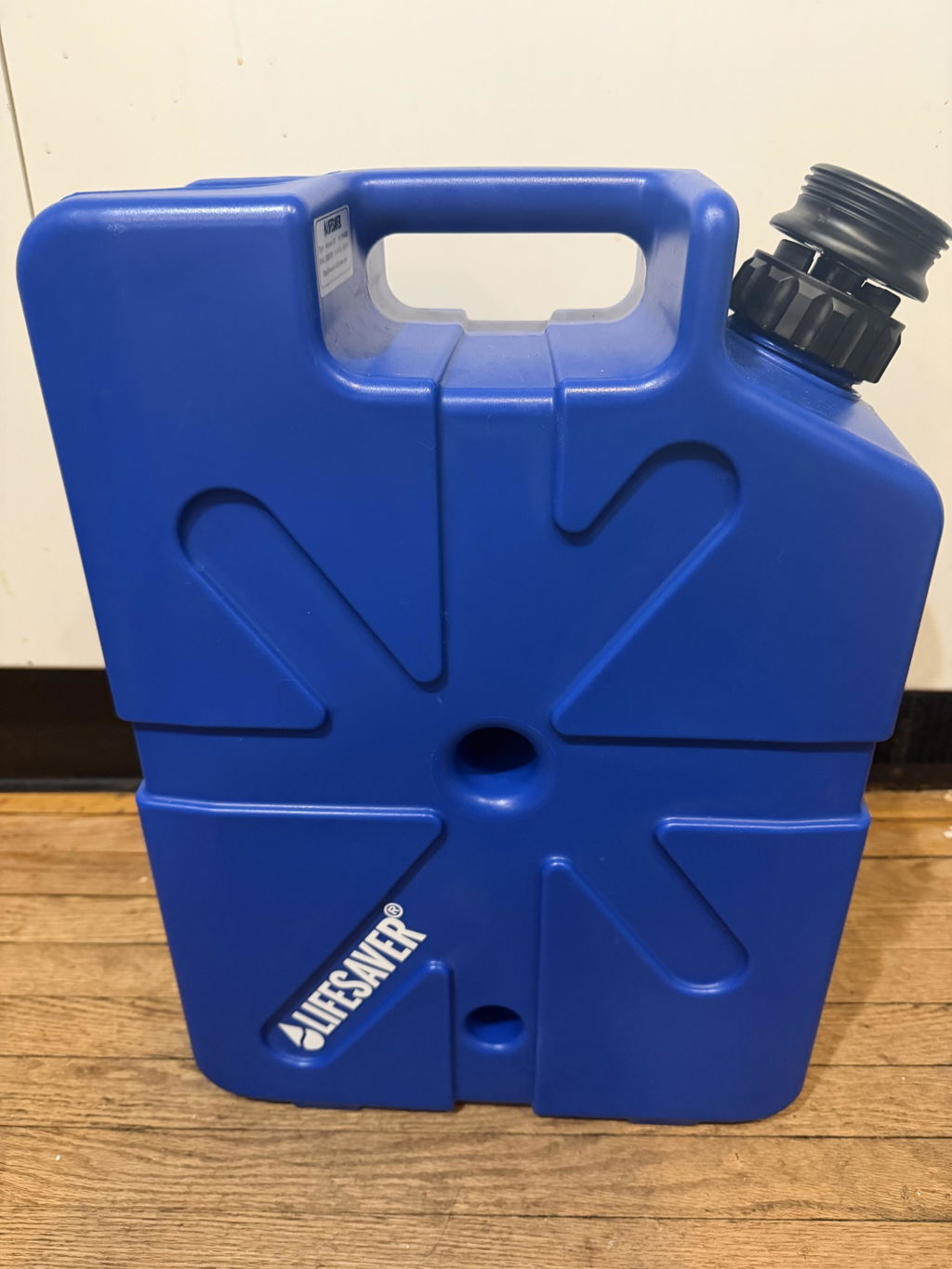
Consider Investing in a Portable Water Purifier
Storing water will help in the event of a severe drought or if the household supply is cut off completely, but keeping a water purifier at home offers many additional benefits:
- It will purify water you have stored in containers, ensuring any build-up of harmful bacteria is removed, and removing any stale taste
- It will purify contaminated tap water, rainwater, flood water and wild water as you need it – so you don’t need to store so much.
- You can take it with you if you have to evacuate your home, providing safe drinking water wherever you end up.
- It takes up far less space and weighs far less than tens of gallons of water.
Take a look at our Preparedness Packs for complete solutions.
Frequently Asked Questions
Can I drink rainwater in an emergency?
Only after it has been properly filtered and disinfected. Rainwater can contain bacteria, parasites, chemicals, and debris collected from roofs and gutters.
Should I freeze emergency water?
Freezing can be useful for short-term storage and helps keep food cold during power outages, but leave room for expansion as water freezes.
Is bottled water better than tap water?
Both can be suitable. Commercial bottled water is convenient, while properly stored tap water is a cost-effective option for larger emergency supplies.
Final Thoughts
Water is the foundation of every emergency preparedness plan. Safe storage doesn't require expensive equipment - just suitable containers, good storage conditions, and a simple rotation schedule. A two-pronged approach, with a few days' of water stored and a water purifier as back-up, will give you far more flexibility in the event of an emergency.
Whether you're preparing for storms, power outages, flooding, or other emergencies, having a reliable supply of clean drinking water provides peace of mind and helps keep your family safe when normal services are disrupted.